Gaming as an entertainment medium has exploded in popularity over the last two decades, making it appealing to people of all ages, particularly the youth. This also means that kids are more interested in playing games today and often interact with thousands of different people online.
While online gaming can be a breeding ground for friendships and memorable experiences, it can sometimes be problematic, particularly when it comes to the safety of young individuals regarding bullying, inappropriate interactions, etc.
To combat such scenarios, Sony has filed a patent dubbed “Online Gaming Monitoring Systems and User Interfaces.” Published in late 2025, the patent goes over an AI-based system where a parent can track their child’s activity in real-time and take appropriate action.
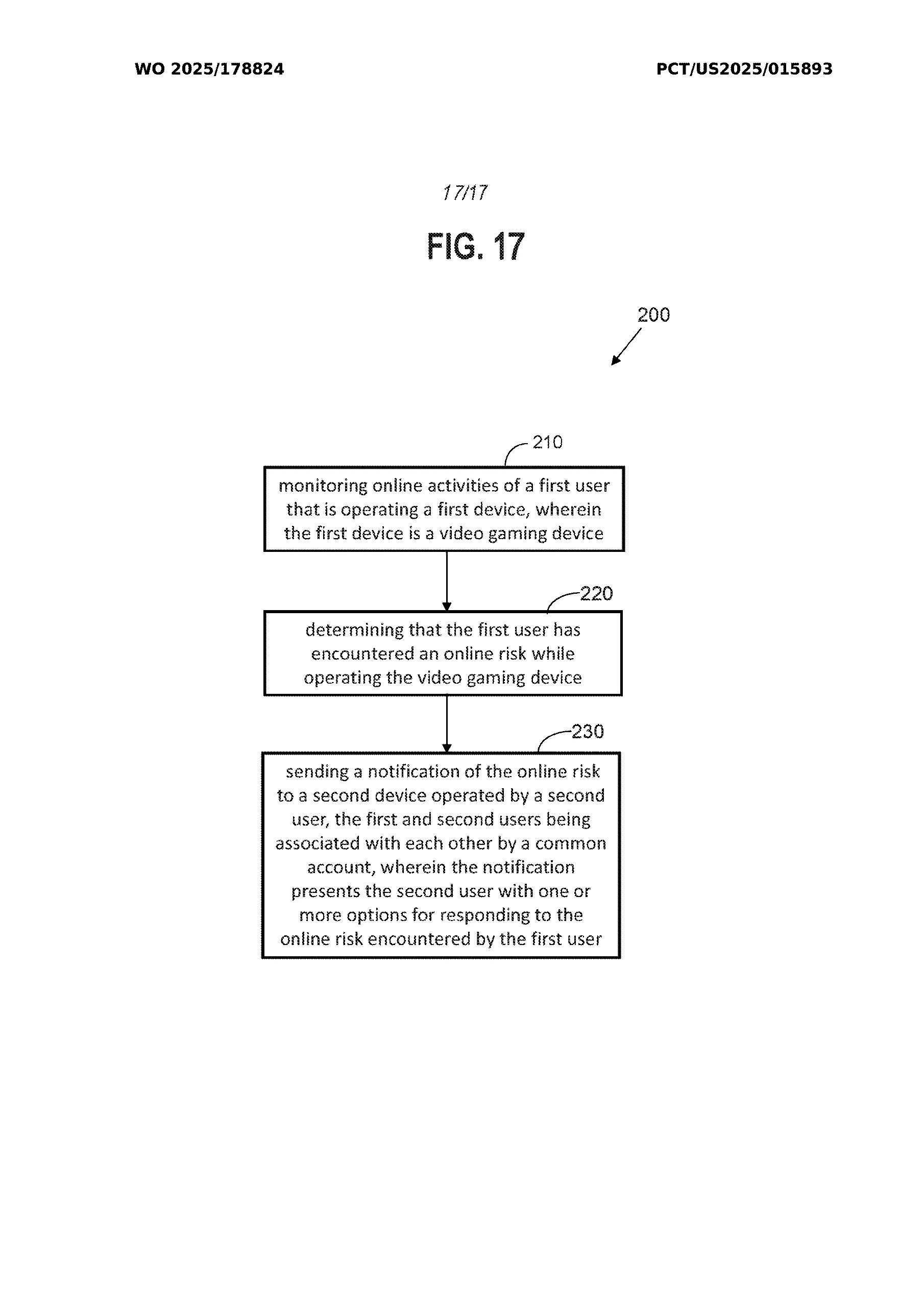
According to Sony’s patent, the system can immediately inform a second user (parent) of a risk encountered by a user (child) when both are operating under the same account. The second user is then presented with various actions to deal with the situation.
Risk assessment is carried out by a ‘risk module,’ and the patent highlights an example where a machine learning model effectively serves as the risk module. In a broader sense, the AI model is meant to detect risks to children through text-based, verbal communications, etc.
For instance, in the event that a child faces harassment from another gamer online, the parent can be notified via the system and take appropriate action.
These actions can include blocking the culprit or reporting them, as well as further monitoring of the child for more information. The criteria for what counts as an ‘online risk,’ as the patent states, can also be modified by the parent.
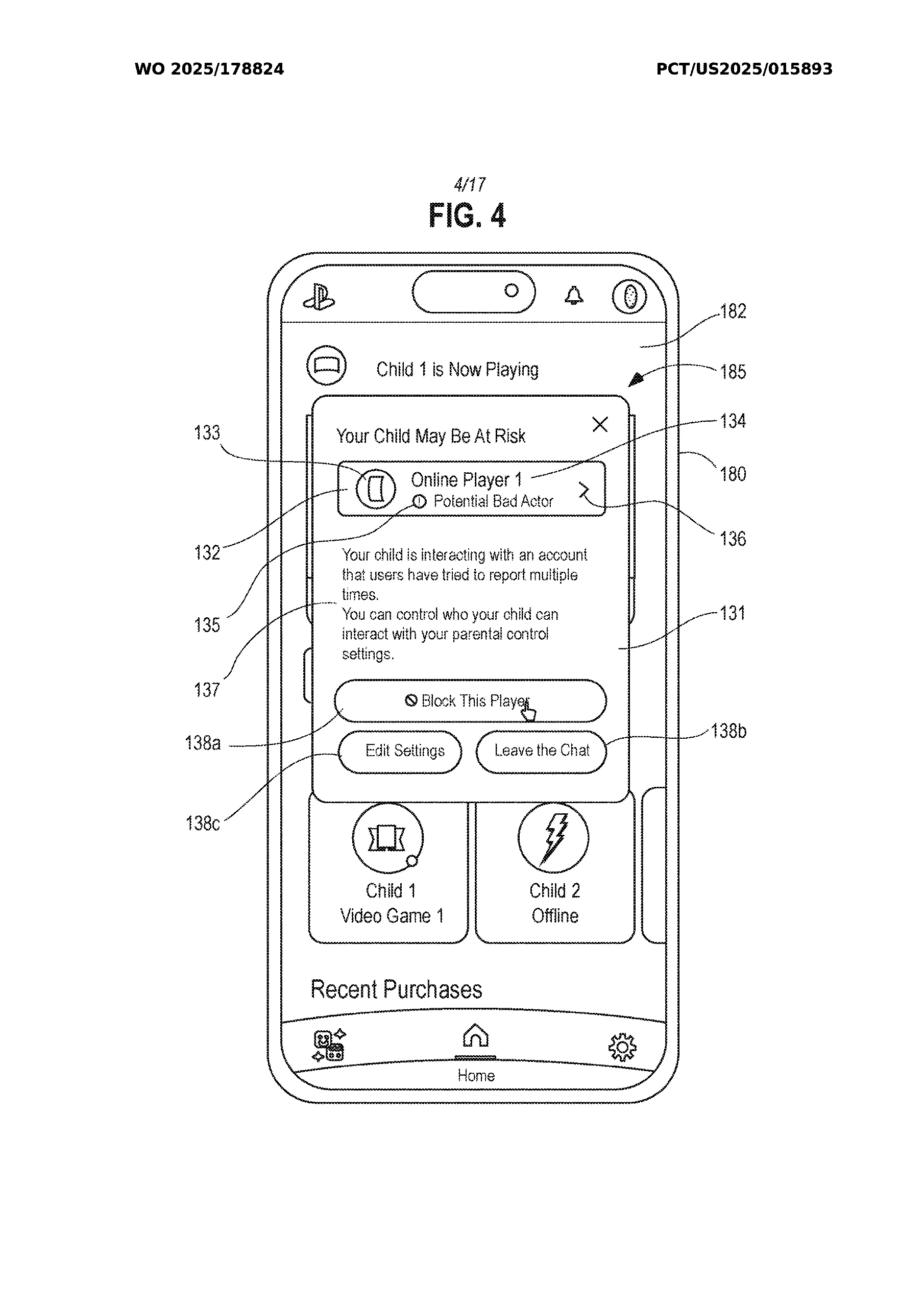
The patent shows how a mobile application can serve as the interface used by a parent for monitoring and taking action. This application is demonstrated in Figure 4 above, highlighting how a parent is notified of the risk posed to a child during an online gaming session.
The same figure also shows the parent taking actions like blocking the third user to protect the child while monitoring in-game activity and interactions.
Because the patent is meant to be broad in nature, this application can even be used to monitor time spent on games by the child, flashing a warning when the child exceeds a set daily gaming limit.
Sony also states that the same principle could be applied to child safety on social media or other environments due to the machine learning model’s versatility.