Ubisoft, once known for being a leader of the open-world genre, is now in a dire state. Between multiple cancellations, financial struggles, management setbacks, and more, the French gaming giant has been fighting an uphill battle for quite a while.
However, its latest announcement might be the one to finally break the camel’s back. When Ubisoft announced the creation of Vantage Studios alongside Tencent, many others and I hoped to see this partnership be somewhat of a fresh start for the publisher. Unfortunately, nobody could have seen Ubisoft’s latest turmoil coming, signalling what could be the beginning of the end.
Ubisoft’s Stock Is In Shambles
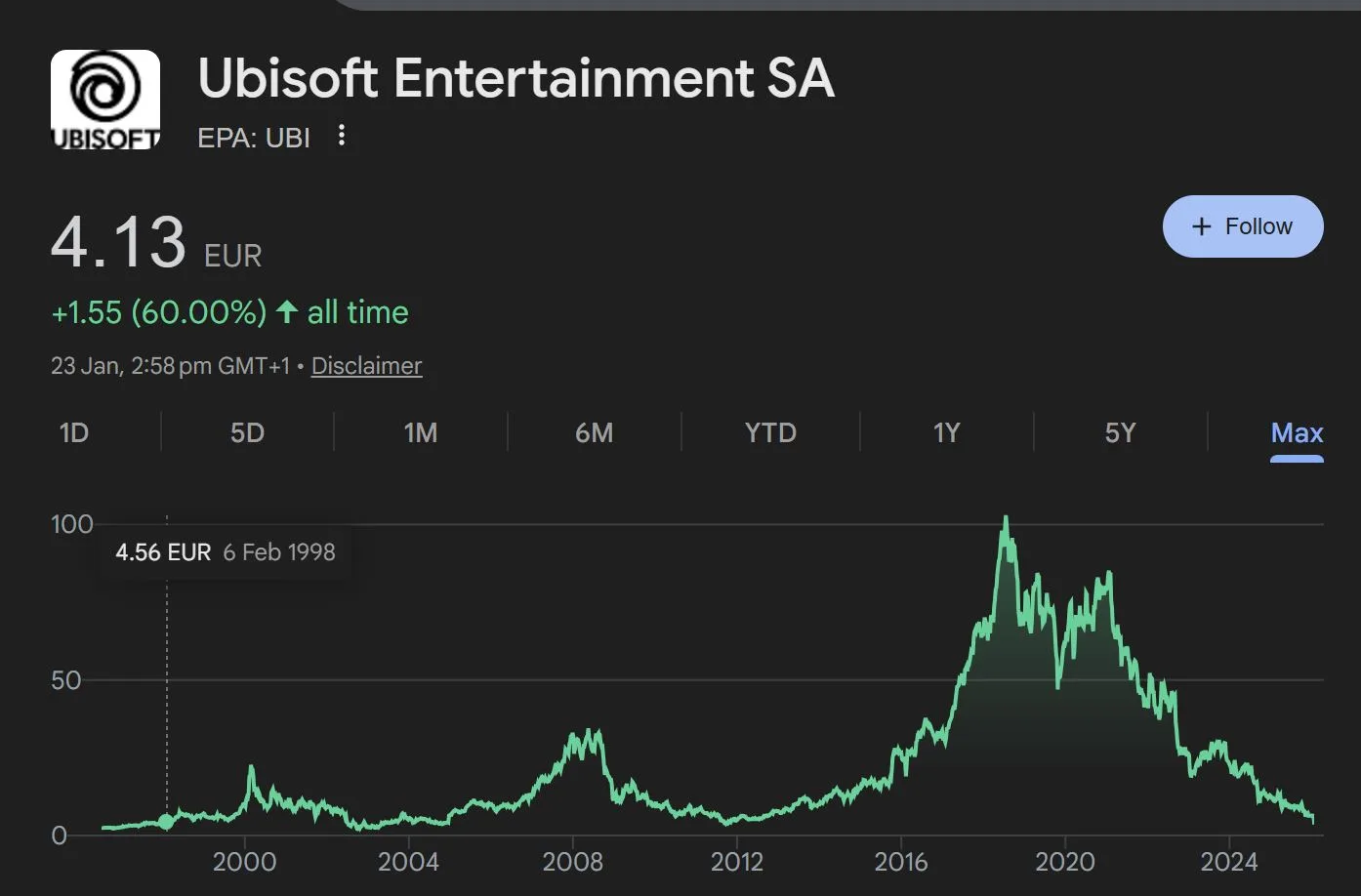
The fact that Ubisoft’s stock keeps falling further and further down has become a tale so old at this point that it’s barely worth talking about. I’ve essentially lost count of the number of times I’ve seen stories covering major drops in the French studio’s share price, with many of them even marking new lows.
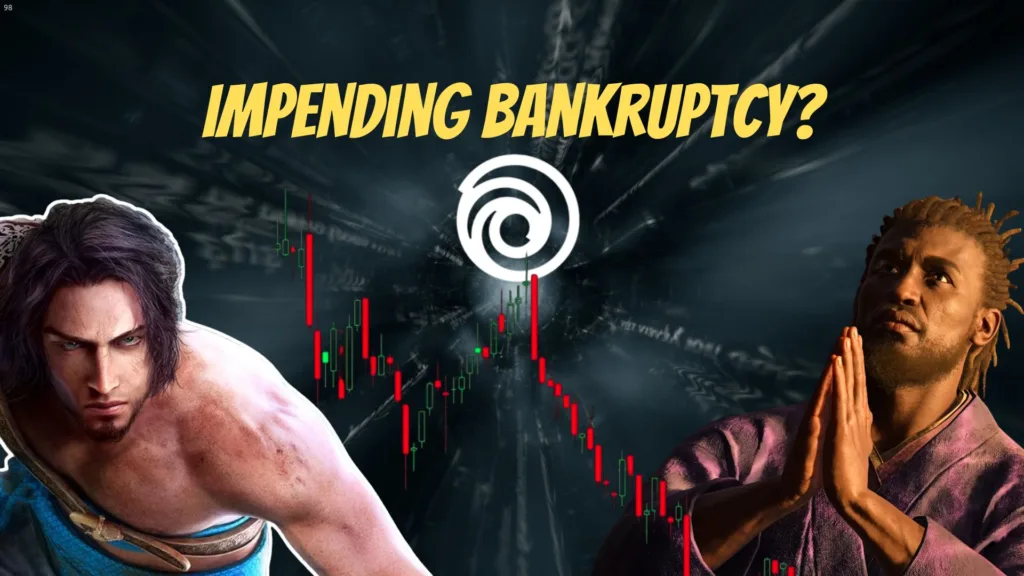
And yet, Ubisoft never ceases to amaze in regard to how low it can continue pushing the value of its own shares. In the events of the company’s latest announcements, those being the cancellations of 6 games and new restructuring plans, the company’s shares are currently valued at just €4.13.
To put how bad this is into perspective, the shares were more expensive at €4.56 in 1998, which, as you may recall, was before this small franchise called Assassin’s Creed was even a thing. Conversations regarding the French publisher’s bankruptcy have also been making the rounds for a while, and for good reason.
As it stands, there’s little hope for the future, and as someone who has defended Ubisoft more often than not, I’ve nearly lost faith as well.
The Management Crisis

Ubisoft, like any other publisher with thousands of employees, has laid off staff in huge numbers recently. Following the company’s latest cancellation, it’s also clear that Yves Guillemot isn’t the most popular among Ubisoft’s management, even among the higher-ups at the company. Discussing the latest events, the company’s employees have had more than a few harsh words to share regarding the CEO, going as far as to compare him to Donald Trump.
According to a translation of statements shared by leaker Jonathan via Twitter, management is in favor of getting rid of the CEO as soon as possible. Management’s grievances aside, it’s become clear that Ubisoft has grown far too big for its own good.
You need only look at the recent layoff numbers to determine just how awful the publisher is at running its many studios across the globe. As Insider Gaming reported, Ubisoft employed a whopping 20,729 people in 2022, a number that shrank to 17,097 by the end of 2025.
During this time, multiple Ubisoft studios, including those in London, Osaka, San Francisco, and more, were also shut down. With even more layoffs expected in the future, it’s become clear that the publisher can no longer accommodate thousands of developers.
Where Ubisoft’s strength in numbers once played a key role in its success, this very factor has become a handicap for the French publisher, highlighting a classic example of the uncontrollable bloat and mismanagement plaguing modern AAA gaming.
Failing To Remake A Game From 20+ Years Ago
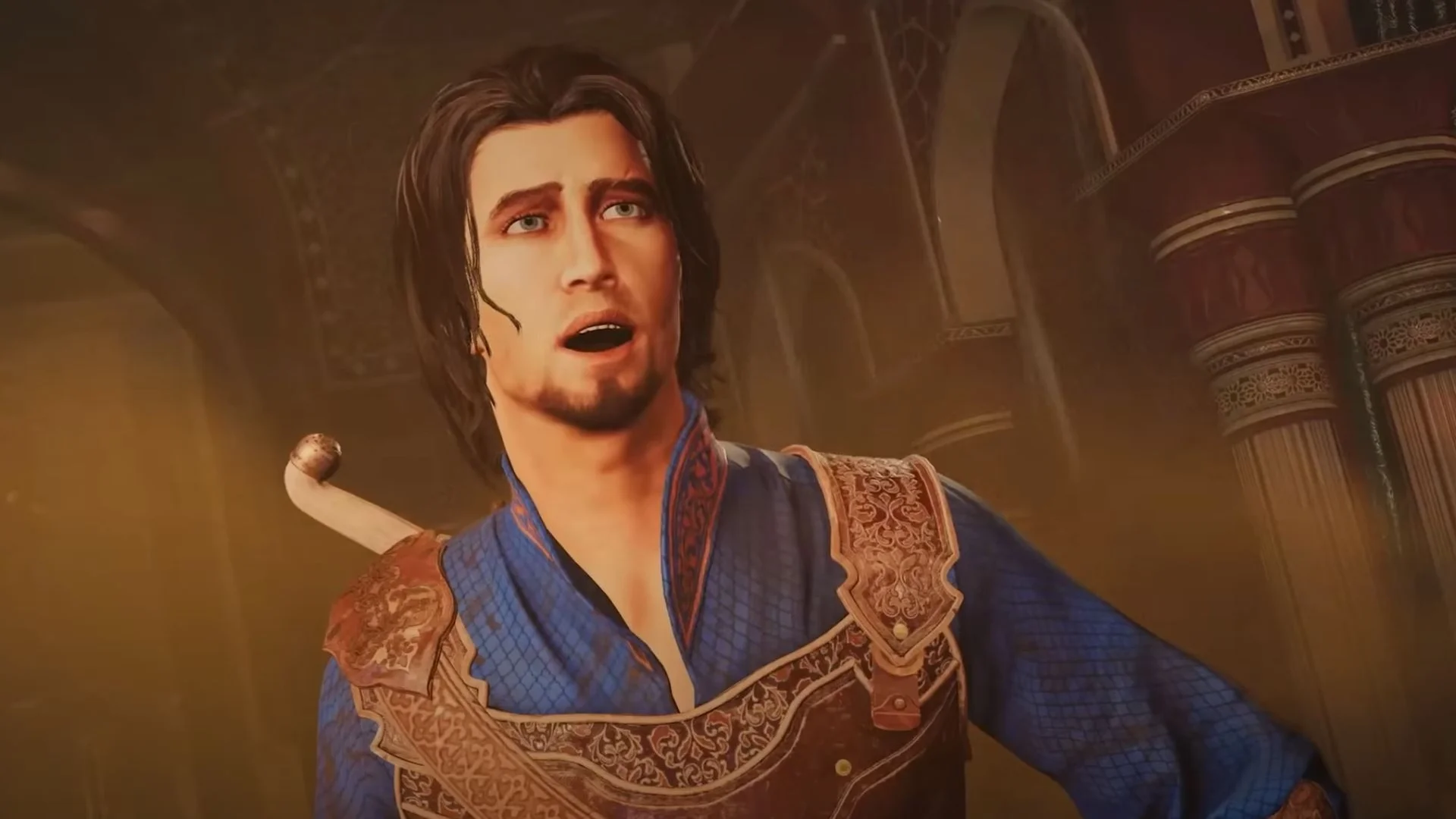
If the seriousness of Ubisoft’s situation has yet to fully set in, look no further than the gaming giant’s failure to remake Prince of Persia: Sands of Time.
Dare I say that this remake’s cancellation is the studio’s biggest failure in the last decade, a big feat considering the decline of Assassin’s Creed, multiple back-to-back live-service failures, projects stuck in limbo, and canned new IPs.
The fact that two Ubisoft studios (Ubisoft India and Montreal) were unable to breathe new life into a project that was already nailed all the way back in 2003 stands as a testament to just how low the studio has fallen. Sands of Time Remake had the potential to be a genuine highlight for the studio this year, but what did Ubisoft do instead of releasing a competent remake? It scurried back to the safety of open-world titles, a genre it has so desperately clung to over the last decade.
When Prince of Persia: Sands of Time originally debuted, Ubisoft had a lot less manpower at its disposal, the hardware running the game was more restrictive, and development cycles were much shorter. In spite of all this, the team managed to create something truly special in the form of a game that stood the test of time.
Yet, with thousands of developers and millions of dollars today, I’m left scratching my head at how Ubisoft has failed to replicate this formula when the blueprint already exists. If anything, this is proof that the team has lost the magic that it once had.
What makes this decision even more baffling is the fact that Prince of Persia: The Lost Crown was lauded for being so different from Ubisoft’s traditional gameplay style. Sands of Time Remake could have built off the momentum created by this project, but all the work on this remake will now be in vain.
Creative Bankruptcy And Chasing Trends
There’s little to be said about the errors of Ubisoft’s ways when it comes to its live-service strategy. Barring exceptions like Rainbow Six Siege and For Honor, the publisher’s experience with this genre has been far from successful.
In fact, past titles like Hyper Scape have failed spectacularly, and even major investments like Skull & Bones have hardly lived up to expectations. For some reason, then, the studio continues to chase this genre, reiterating its focus on the GAAS (Games as a Service) model. Prior to the studio’s latest update, reports pointed to the existence of another battle-royale within the company.
This project has likely been cancelled at this point, but this won’t stop Ubisoft from trying to capture the lightning-in-a-bottle moment of the battle-royale genre. Simply put, the French giant is too late to the party, but it keeps trying to barge its way in like an uninvited guest.
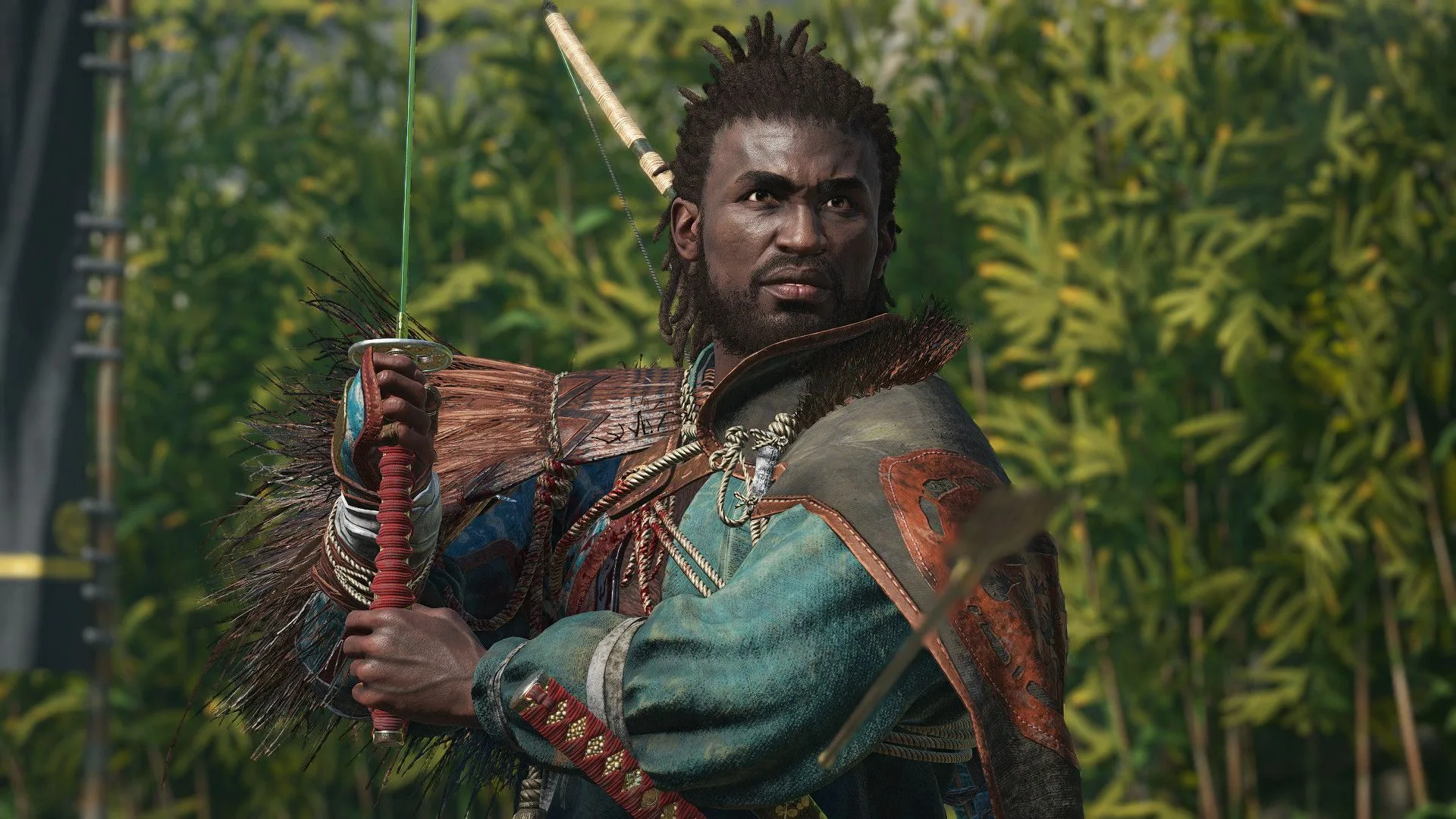
Let’s also not forget about Assassin’s Creed. Once the blueprint for open-world titles, this series has, in my opinion, been reduced to a shadow (pun not intended) of its former self. Whether it be Valhalla, Mirage, or Shadows, the latest games lack the heart that made this franchise so great in its heyday.
Modern Assassin’s Creed, as far as I’m concerned, is a bloated mess, comprising repetitive activities and mundane stories. Shadows, being the series’ latest entry, somehow also features some of the worst voice acting in the franchise and frequently delivers laughably poor cutscenes due to poorly-mocapped cutscenes.
Nothing shows the creative bankruptcy of Assassin’s Creed better than Ubisoft’s insistence on relying on the theme song Ezio’s Family year after year, when it was perfectly capable of making equally solid themes for each Assassin’s Creed entry in the past.
Ezio’s Family has somehow become the main Assassin’s Creed theme today, returning in each new game, and there’s no better allegory for how past its prime Ubisoft’s flagship series is in the modern era.

At this point, it’s hard to imagine Ubisoft ever returning to its former glory. Sure, the studio might show glimpses of its former glory here and there, as it recently did with Prince of Persia: The Lost Crown, but the French giant seems to have become its own worst enemy.
As the gaming giant continues to wrestle with its own mistakes and mismanagement, it may be time to accept that Ubisoft, as we knew it, is long gone.